• Home
  • About
    • Description
    • Objectives
    • Work Plan
    • Consortium
  • Network
  • Resources
    • Dissemination Materials
    • Deliverables
    • Publications
    • Workshops
    • Podcasts
    • Videos
  • Workshop
    • 1st Workshop & Field Mission to Central Greece
  • News & Events
    • News
    • Events
    • Press Releases
  • Contact

Home

All posts by : admin

News 4 a
June 16, 2026
by admin

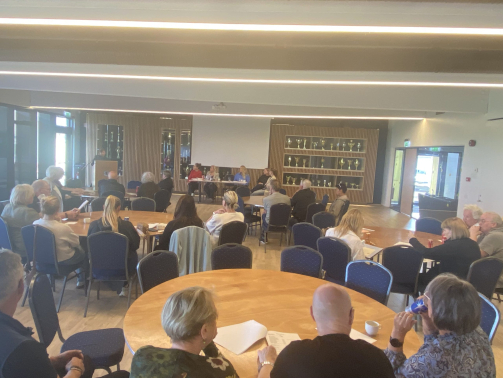
Prep2Shelter presented to the Grindavík community in Iceland

On 16 June 2026, Sólveig from the Earthquake Engineering Research Centre (EERC) at the University of Iceland presented the Prep2Shelter project during the General Meetin ...

News 3
April 21, 2026
by admin

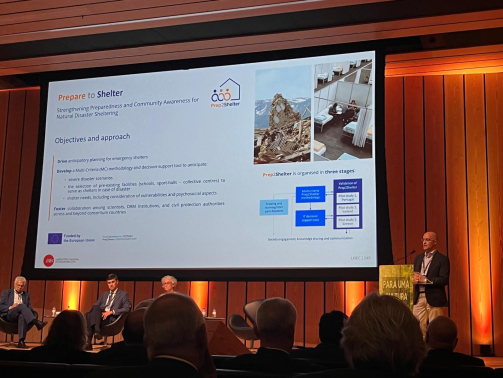
Prep2Shelter presented at the 3rd National Conference on Civil Protection | Lisbon

The Prep2Shelter project was presented at the 3rd National Conference on Public Policies for Civil Protection, held on 21 April 2026 at the auditorium of the EDP building in Lisbon, Portugal. Organised by CEIPC – Centre for Studies ...
News 2b
April 16, 2026
by admin

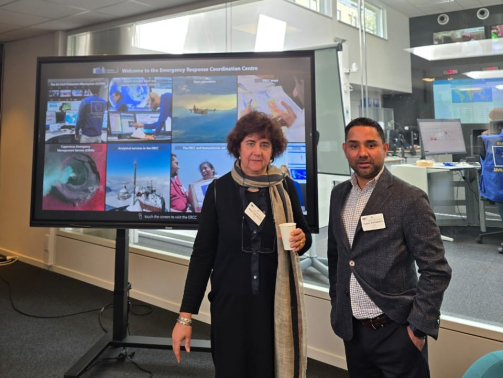
Prep2Shelter presented at the UCPM Kick Off Meeting | Brussels, Belgium

On 16 April 2026, Prep2Shelter was presented in Brussels at the kick-off meeting for projects funded under the UCPM-2025-KAPP-PVPP call. Maria Luísa Sousa from the National Laboratory for Civil Engine ...
KickOff Meeting
March 3, 2026
by admin

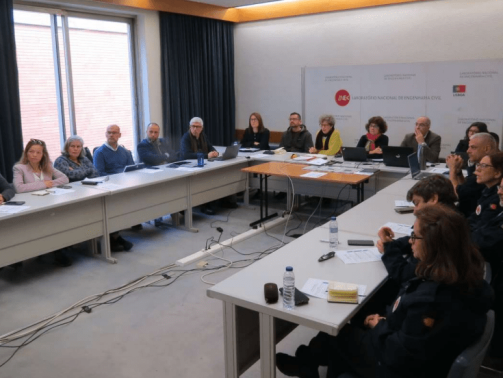
Prep2Shelter Kick-Off Meeting marks the official start of the project

The Prep2Shelter - Prepare to Shelter consortium officially launched the project during its Kick-Off Meeting held in Lisbon, Portugal. The meeting brought together partners from Portugal, Iceland, Greece, and other European countri ...

prep2shelter - logo-04

Grant Agreement no. 101253403.
Prep2Shelter UCPM-2025-KAPP-PVPP
Views and opinions expressed are however those of the author(s) only and do not necessarily reflect those of the European Union. Neither the European Union nor the granting authority can be held responsible for them.

Quick Links
  • Home
  • About
  • Network
  • Resources
  • News & Events
  • Contact us
Contacts
prep2shelter@gmail.com
Instagram Linkedin Youtube
© 2026 . All rights reserved.
Shopping Basket

WP7 – Pilot Study 2. Earthquakes in Iceland – Lead by EERC

This WP concerns Selfoss pilot study (Iceland), serving to validate the multicriteria methodology (WP3) and IT tool (WP4). It addresses emergency shelter needs in the South Iceland Seismic Zone, one of the country’s most active seismic areas, through the practical implementation of the project’s approach.

The study focuses on the South Iceland lowland, particularly Árborg Municipality and the town of Selfoss, a rapidly growing urban area facing housing and infrastructure pressures. Within this context, the multicriteria methodology and IT tool will be tested to support the assessment of shelter needs, available resources, and response planning, taking into account evolving demographic and infrastructural conditions.

WP3 – Multicriteria Prep2Shelter methodology – Lead by LNEC

This WP concerns the development of a multi-criteria methodology to support shelter selection, based on a Performance Assessment System (PAS). The PAS is structured on the definition of objectives, assessment criteria, and metrics, designed to ensure consistency across different hazard scenarios, geographical contexts, and social conditions.

The Objectives–Criteria–Metrics framework builds directly on the outcomes of WP2, integrating evidence from the literature review and case study analysis. It is further refined through a co-creation process involving Disaster Risk Management (DRM) stakeholders, ensuring its relevance, robustness, and operational applicability.

The methodology developed in WP3 establishes the conceptual basis for the decision-support IT tool to be developed in WP4. It will subsequently be tested and validated in WP6, WP7, and WP8, contributing to the delivery of a practical, flexible, and user-friendly multi-criteria tool for disaster shelter planning.

WP5 – Society engagement, knowledge sharing and communication – Lead by SPI

WP5 focuses on knowledge-sharing, social networking, and project outreach. Its main goal is to strengthen collaboration and ensure effective exchange between scientific communities and disaster risk management (DRM) and civil protection stakeholders, both within the consortium countries and beyond.

The objectives of this WP are: (i) to foster collaboration and create learning opportunities among relevant stakeholders; (i) to develop awareness-raising and guidance materials to support disaster shelter planning beyond the duration of the project; (iii) to disseminate the outcomes of Prep2Shelter.

As a cross-cutting work package, WP5 will ensure that the activities carried out in WP2, WP3, and WP4 are co-developed with DRM practitioners and aligned with their needs and perspectives. In doing so, it will enhance the practical relevance, usability, and long-term impact of the project’s outputs.

WP4 – IT decision support tool – Lead by LNEC

This WP develops an interactive, web-based platform to operationalize multicriteria methodology (WP3) and its application in disaster shelter planning.

The platform will provide intuitive dashboards that guide users through the multi-criteria framework workflow. It will include the core set of objectives, with options to customize criteria and metrics according to user needs. Input data will be sourced from WP3 as well as user-provided datasets.

Developed through a collaborative process with DRM stakeholders, the platform will be tailored to support real-world applications. The platform will be  tested and validated in three pilot areas: Lisbon, Portugal (WP6); Selfoss, Iceland (WP7); and Thessaly, Greece (WP8).

WP8 – Pilot Study 3. Multi-Hazard Emergency Shelter Planning in Thessaly, Greece (Post-2021 Earthquake and 2023 Storm Daniel) – Lead by NTUA

This work package concerns the Thessaly pilot study (Greece), serving to validate the methodology and tools developed in the preceding work packages in a multi-hazard context. Through their implementation, it addresses disaster shelter planning by considering the cascading effects of different hazard types within the same region.

The study is carried out in the region of Thessaly, which has experienced two major and distinct natural disasters in recent years. In March 2021, a Mw6.3 earthquake caused extensive structural damage across rural and urban areas, particularly affecting traditional unreinforced masonry buildings. More recently, in September 2023, Storm Daniel triggered one of the most severe flooding events in Greek history, leading to widespread destruction of homes and critical infrastructure, and displacing approximately 10,000 residents. Emergency response measures included the rapid conversion of public facilities into temporary shelters and the large-scale provision of essential supplies, supported by national and EU Civil Protection mechanisms.

Within this context, the pilot study focuses on testing and validating the multi-criteria methodology (WP3) and IT tool (WP4), in close collaboration with local DRM stakeholders engaged through WP5.

WP6 – Pilot Study 1. Earthquakes in Lisbon – Lead by LNEC

This work package concerns the Lisbon pilot study, serving as a key step in testing and validating the methodology and IT tool developed in the preceding work packages. Through their application, it supports the classification, evaluation, and selection of pre-identified facilities such as Zones for Concentration and Assistance to Population (ZCAPs), which function as emergency shelters following major natural hazards, particularly earthquakes.

Methodologically, this pilot study requires: i) the development of a geospatial database containing information on candidate ZCAPs and estimates their requirements (e.g., capacity and activation period) based on hazard scenario simulations; ii) the assessment the seismic performance of candidate facilities; iii) the prioritization of ZCAPs using a scoring system that reflects structural integrity and other essential criteria; and iv) the organization of a local workshop to validate the findings, demonstrate results, and provide hands-on training to stakeholders, thereby supporting the continued use of the platform and tools beyond the project duration.

WP2 – Scoping and learning from disasters

This WP defines the overall scope of the project through a systematic review of scientific literature and an in-depth analysis of past disaster events. This combined approach establishes the basis for the identification of sheltering requirements, as well as the needs and demands of affected populations under different hazard conditions.

Four past disaster case studies have been selected to support this analysis:

  • Central Italy – 2016 seismic sequence
  • Reykjanes Peninsula, Iceland – 2022 volcanic crisis
  • Thessaly, Greece – 2021 earthquake, followed by storm and flooding in 2023

Through scientific literature and case studies, the critical factors influencing shelter performance and occupancy will be identified, supporting the definition of sheltering requirements. These findings will directly inform the development of the multi-criteria methodology in WP3.

This WP contributes to knowledge exchange and shared learning among stakeholders, in alignment with WP5, with particular emphasis on the development of DRM Practitioners Network and facilitation of project workshops.

WP1 – Project management and coordination – Lead by LNEC

This work package ensures the overall coordination of the project. It focuses on delivering the work on time, maintaining quality, and making sure the results meet stakeholders’ needs. It also ensures that project outcomes remain accessible after the project ends, including through the UCPKN platform.